Excavations 2010
In Trenches 4 and 5, near the Manor House, excavations revealed that the ground had previously been reduced to natural subsoil, likely during construction of the 18th–19th century north and west wings. Overlying deposits consisted of thin made ground.
A partially exposed, undated feature was found beneath the 18th-century north wing. Comprising stone rubble and loose topsoil, it produced only one residual Roman sherd and is likely a garden feature truncated during construction.
Trench 5 also uncovered a well, 1.5m wide and built with dressed stone. It had been backfilled with rubble and domestic waste, including a clay pipe bowl dated to c. 1780–1820. This provides a reliable date for the well’s construction.
During demolition of the manor extension, a horseshoe and a 19th-century transfer-printed plate were recovered from within the building’s walls. These finds reflect routine domestic use.
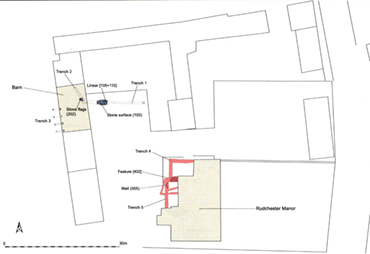
Rudchester Manor Excavations 2010
Click here for a high resolution scan in a new window:
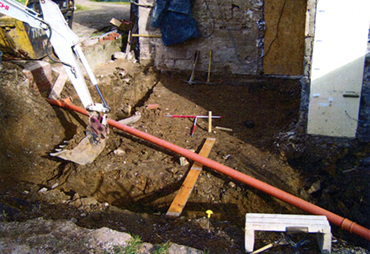
Trench 4
Click here for a high resolution photograph in a new window:
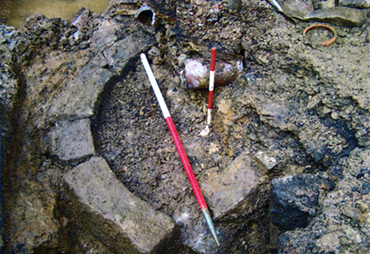
Trench 5
Click here for a higher resolution photograph in a new window:
Summary
The watching brief confirmed limited Roman activity through re-used masonry and residual pottery, but no evidence of the vicus was found. Medieval features, including a 12th-13th century ditch and activity layers, offer glimpses into early Rudchester, including the likely construction of a tower house around 1285. Post-medieval developments, especially to the barn and manor, are better represented. Overall, the restricted scope of the excavations and poor environmental preservation limited broader interpretations.